

Estrogen Dominance
The body produces natural estrogens but there are chemicals called xenoestrogens that mimic estrogen in the body. These xenoestrogens may lead to hormonal imbalances including estrogen dominance if they are not cleared appropriately.
Signs of estrogen dominance include:
- Mood swings and depression around cycle time
- Weight gain
- Breast tenderness and edema
- Irregular cycles, infertility
- Heavy periods
- Cyclic insomnia, night sweats
- Weight gain
- Low functioning thyroid
Estrogen Metabolism 101
Estrogen is metabolized by the liver and converts excess estrogens into compounds that can be excreted by the body. There are three pathways through which estrogen can be metabolized (see graphic below):
- 16-OH (16-Hydroxy) may exacerbate estrogen excess symptoms and can contribute to estrogen sensitive tissue proliferation (breast, endometrial, prostate, etc.).
- 4-OH is potentially harmful if not detoxed and can bind and damage DNA
- 2-OH is the most stable and preferable pathway
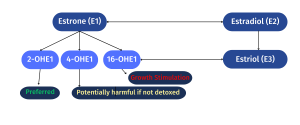
It’s important to detox estrogens along what is called the 2-OH pathway due to issues listed above but also for reduced cancer risk.
The Dutch Test is a dried urine hormone test I offer that analyzes the estrogen metabolites. Please reach out if you would like to do this test.
5 Steps you can take to support the healthy estrogen levels and detoxification:
1) Limit Xenoestrogen Exposure
Examples of xenoestrogens:
- Polychlorinated biphenyls (PCBs)
- Bisphenol A (BPA)
- Phthalates
These can be found in plastic bottles, cosmetics, shampoo and personal care products, oil-based coatings, pesticides, cleaning products and hormone treated meats.
You can do this by limiting the amount of chemicals you use on your body and in your home.
Check out https://www.ewg.org/skindeep/ site for your personal care products.
Recently I also emailed out a handout on making your own cleaning products. Get the guide here if you missed it. https://dragonfly360.net/wp-content/uploads/2025/01/GreenCleaning_handouts-1.pdf
Buying free range meats that are not treated with hormones helps clean protein intake.
2) Improve Estrogen Metabolism By Promoting the 2-OH Pathway
Promoting the 2-OH pathway of estrogen metabolism is key to overall health and longevity.
Nutrients for supporting the 2-OH pathway are fish oils, flaxseed, and rosemary. DIM or Indole-3-carbinol also promote the 2-OH pathway and are compounds found in cruciferous vegetables such as broccoli and cauliflower. Be sure to incorporate these in your diet. B vitamins, particularly B6, B12, and folate also promote the 2-OH pathway.
A diet that is low in simple carbohydrates and high in vegetable carbohydrates will provide adequate fiber, lignans, and antioxidants to support detoxification.
Omega-3 fats, which are found in fatty fish, have been shown to promote the 2-OH pathway over the 16-OH pathway. Eating fatty fish such as salmon, sardines, anchovies 2-3 times a week typically provides sufficient omega 3’s. If not, supplementation with a high concentration of EPA and DHA fish oil daily is recommended.
Ensure adequate protein intake. Low protein diets have been shown to decrease activity of cytochrome P450, enzymes that help detoxify drugs and chemicals including estrogen.
Eating a healthy diet will support less body fat which is key to estrogen detoxification as body fat can hold onto toxins. This is due to the fact that toxins are fat soluble. Sometimes people will have difficulty losing weight due to the toxins being stuck in body fat.
3) Ensure Complete Elimination of Estrogen
The 2-OH and 4-OH estrogen metabolites are cleared out primarily through methylation. Methylation support may include methylated B vitamins, magnesium, choline, trimethylglycine (TMG), methionine, zinc, and SAMe.
The 16-OH-E1 estrogen metabolites are cleared out primarily through glucuronidation and sulfation.
Support sulfation with high sulfur vegetables including onions, garlic, eggs, brassicas, asparagus, and arugula. In addition, support may include supplementing with molybdenum and sulfur donors such as methionine, NAC, methylsulfonylmethane (MSM), taurine, sulforaphane, glutathione.
Poor gastrointestinal health can inhibit excretion of unwanted estrogen from the body and promote its reabsorption. Beta-glucuronidase is an enzyme induced by “bad” bacteria in the gut. Many toxins, hormones, and drugs are excreted from the body after conjugation (combining) to a glucuronide molecule. Beta-glucuronidase can uncouple these conjugates, freeing these potential carcinogens in the bowel and allowing re-entry to the circulation in the body. This creates an unhealthy system. Glucuronidation support may include sulforaphane, quercetin, curcumin, and calcium-d-glucarate. Glucaric Acid which is part of calcium-d-glucarate is found in apples, oranges, broccoli and spinach.
Dietary fiber can help reduce the amount of Beta-glucuronidase as well as lignans (fruits, vegetables, legumes, seeds, whole grains, flax, and sesame seeds).
An appropriate probiotic is essential because it will increase the “good bacteria” in the gut to crowd out the bad bacteria and support glucuronidation.
4) Optimize Fat Soluble Vitamins
Fat soluble vitamins (A, D, K, E, CoQ10) are antioxidants and also play an important role in your immunity. Low Vitamin E levels are associated with elevated estrogen levels and Vitamin E has been shown to inhibit the growth of cancer cells. Lab checking your levels at least once a year is a good idea to ensure you are getting sufficient amounts in diet. In addition, since your body will store fat soluble vitamins, you can take too much of them so it is important to monitor.
5) Limit alcohol intake
Alcohol increases estrogen levels in men and women, and it has been shown to decrease testosterone as well.
References:
Simpson, E. Sources of Estrogen and Their Importance. Journal of Steroid Biochemistry and Molecular Biology. 2003. 86(3-5), 225-230.
Zahayi, A., Perel, M. The Information Encoded by the Sex Steroid Hormones Testosterone and Estrogen: a Hypothesis. Journal of Theoretical Biology. 2011. 280(1), 146-149.
Cutolo, M., Sulli, A., et al. Estrogen Metabolism and Autoimmunity. Autoimmune Reviews. December 2011. Published Ahead of Print.
Ye, L., Chan, F., et al.The Citrus Flavonone Hesperetin Inhibits Growth of Aromatase-Expressing MCF-7 Tumor in Ovariectomized Athymic Mice.Journal of Nutritional Biochemistry. December 2011. Published Ahead of Print.
Mousa, N., Eiada, R., et al. The Effect of Acute Aromatase Inhibition on Breast Parenchymal Enhancement in Magnetic Resonance Imaging: A Prospective Pilot Clinical Trial. Menopause. January 2012. Published Ahead of Print.
Teas, J., Cunningham, J., et al. Urinary Estrogen