
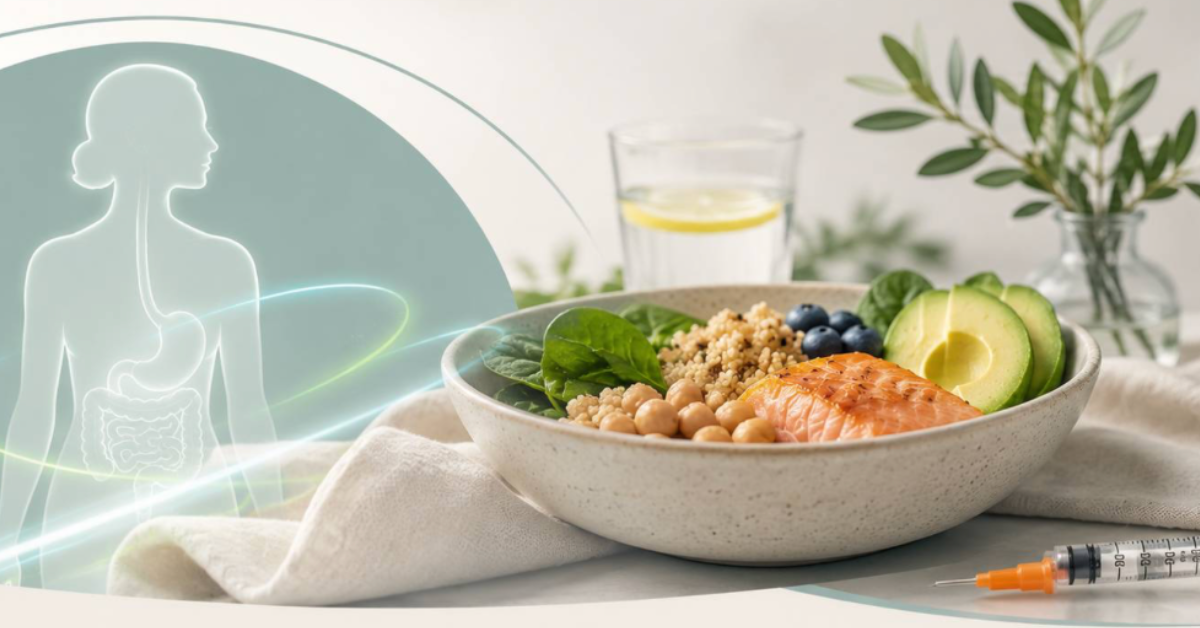
TL;DR: GLP-1 medications work by mimicking a hormone your body already produces, but sustainable weight loss depends on much more than the medication itself. Nutrition, gut health, hormones, and muscle preservation all play a role in the results and long-term outcomes.
Key Takeaways:
- Your gut plays a direct role in GLP-1 production. Beneficial bacteria ferment fiber into short-chain fatty acids, which help stimulate your body’s natural GLP-1 release.
- Diet and exercise still matter on a GLP-1. Reduced food intake makes protein, fiber, and hydration more important, and resistance training helps preserve muscle during weight loss.
- Muscle loss is a real risk worth managing. Weight loss on a GLP-1 can include lean muscle along with fat, so gradual, sustainable loss paired with adequate protein protects long-term metabolic health.
- Blood sugar, thyroid function, and hormone balance all influence whether a GLP-1 succeeds, and coming off the medication long-term often depends on addressing those underlying factors.
GLP-1 medications have become a popular tool for weight loss, but there’s a lot more to understand than how much weight you might lose.
Your body actually makes its own GLP-1, and your gut, nutrition, blood sugar, hormones and lifestyle can all be important pieces of the metabolic picture.
Whether you’re considering a GLP-1, currently taking one, or simply curious about how they work, here are answers to some of the most common questions I hear from patients.
What exactly is GLP-1?
GLP-1 (glucagon-like peptide-1) is a hormone the body naturally makes, primarily from specialized cells in the digestive tract. It helps coordinate blood sugar, appetite, fullness and digestion.
Can I increase my body’s natural GLP-1 through food?
Yes. Your body naturally releases GLP-1 in response to food, and different nutrients stimulate that release in different ways.
There isn’t one magical “GLP-1 food.” Research suggests that an eating pattern rich in fiber, healthy unsaturated fats and adequate protein similar to a Mediterranean-style diet can support your body’s natural GLP-1 response.
Instead of searching for a food or supplement that’s “nature’s Ozempic,” focus on the bigger picture: protein + fiber-rich plants + healthy fats + a well-supported gut microbiome.
What does gut health have to do with metabolism?
Your gut is an important part of your metabolic and hormone signaling system.
Specialized cells throughout your intestinal tract sense nutrients from the foods you eat and release hormones that communicate with your brain, pancreas and other parts of your body. One of these hormones is GLP-1, which helps regulate appetite, blood sugar and digestion.
How does the gut microbiome affect GLP-1?
When certain beneficial bacteria ferment fiber, they produce compounds called short-chain fatty acids (SCFAs). These compounds can interact with specialized cells in the intestine and help stimulate your body’s natural GLP-1 release.
This is one reason why feeding your gut bacteria with a variety of fiber-rich foods may support both gut and metabolic health.
If I go on a GLP-1, do I still need to change my diet and exercise?
Yes. A GLP-1 can be a helpful tool, but it doesn’t replace good nutrition and movement. Because you may be eating less, what you eat becomes even more important.
Adequate protein, fiber-rich whole foods, hydration and nutrient-dense meals, along with resistance training to help preserve muscle. The goal isn’t just to lose weight; it’s to support your metabolism, maintain muscle and build habits that can continue long-term.
If my body already makes GLP-1, why would I need a medication?
Natural GLP-1 is broken down very quickly in the body. GLP-1 medications are designed to activate the same receptors for much longer, creating a stronger and more sustained effect.
For some people who have struggled to lose weight despite making dietary and lifestyle changes, a GLP-1 medication may be a helpful tool to help get things moving in the right direction.
What can I do to support my gut if I’m taking a GLP-1?
GLP-1 medications can cause digestive side effects such as constipation, nausea, bloating and feeling overly full.
Support your digestion by staying well hydrated, getting adequate protein and overall nutrition, including fiber as tolerated, eating smaller meals, staying active, and supporting a healthy gut microbiome. Address digestive issues early rather than waiting for it to become a bigger issue.
Will I lose muscle on a GLP-1?
Weight loss can include lean muscle mass as well as body fat, which is why adequate protein and resistance training are especially important while taking a GLP-1.
I encourage my patients to focus on gradual, sustainable weight loss while prioritizing nutrition and muscle preservation, not simply losing weight as quickly as possible.
Do I have to stay on a GLP-1 forever?
The appropriate duration is individualized. While weight regain can occur after stopping a GLP-1, many individuals have been able to gradually titrate off while focusing on the nutrition, lifestyle and metabolic factors that support long-term weight management.
How do I know if a GLP-1 is right for me?
GLP-1 medications can be an excellent tool in the right situation, but it is important to understand why your body may be resisting weight loss in the first place.
I look at the bigger picture including metabolic health, blood sugar and insulin, thyroid function, hormones, nutrition, gut health, medications, health history and your individual goals.
Is it important to balance hormones prior to going on GLP-1?
Yes, hormones act like your body’s “control knobs” for appetite, energy use, stress response, and how easily you store or burn fat, so even a great diet can stall if key signals are out of balance.
Ready to Take the Next Step?
A GLP-1 can be a helpful tool, but weight loss is rarely about just one hormone, medication or number on the scale. Understanding your blood sugar and insulin, thyroid, hormones, nutrition, gut health and lifestyle can help uncover what may be contributing to stubborn weight.
If you’re ready to understand what’s really driving your metabolism, book a 15-minute Discovery Call with Dr. Melanie to talk about whether working together is a good fit.
Not ready yet? Keep learning:
- Follow Dr. Melanie on Instagram for practical nutrition, lab, and hormone education
- Read past newsletters and join the Dragonfly 360 newsletter for health tips delivered to your inbox
References:
- Mozaffarian et al., Am J Clin Nutr, 2025.
- Huber et al., Am J Clin Nutr, 2024.
- Bodnaruc et al., Nutr Metab, 2016.
- Kouraki et al., Curr Opin Clin Nutr Metab Care, 2026.
Related Links:
- Naturopathic Services
- Health Issues
- Why Weight Loss Isn’t One-Size-Fits-All: The Role of Nutrigenetics
- Support for Healthy Estrogen Metabolism
- Weight Loss
- Shop
- Contact
- Book an Appointment
Dr. Melanie MacLaren is a naturopathic doctor and RGCC provider who founded Dragonfly 360 Wellness to help patients understand the metabolic, hormonal, and gut health factors behind weight and chronic illness. She treats concerns including hormone imbalances, digestive issues, and weight gain using nutrition, supplements, and peptide therapy. Schedule a virtual or in-person appointment in Indianapolis by calling (317) 344-9840.